
Production Planning · Production insight
How to Plan a First Streetwear Capsule Without Too Many Production Variables
The safest first streetwear capsule is not automatically the smallest one. It is the one where the buyer can explain which variables are shared, which variables are intentionally different, and what each sample or production decision is meant to prove. Freeze the core fit and approval rules, group garments by compatible fabric and construction routes, limit unnecessary color and decoration combinations, and move unproven experiments into a later drop.
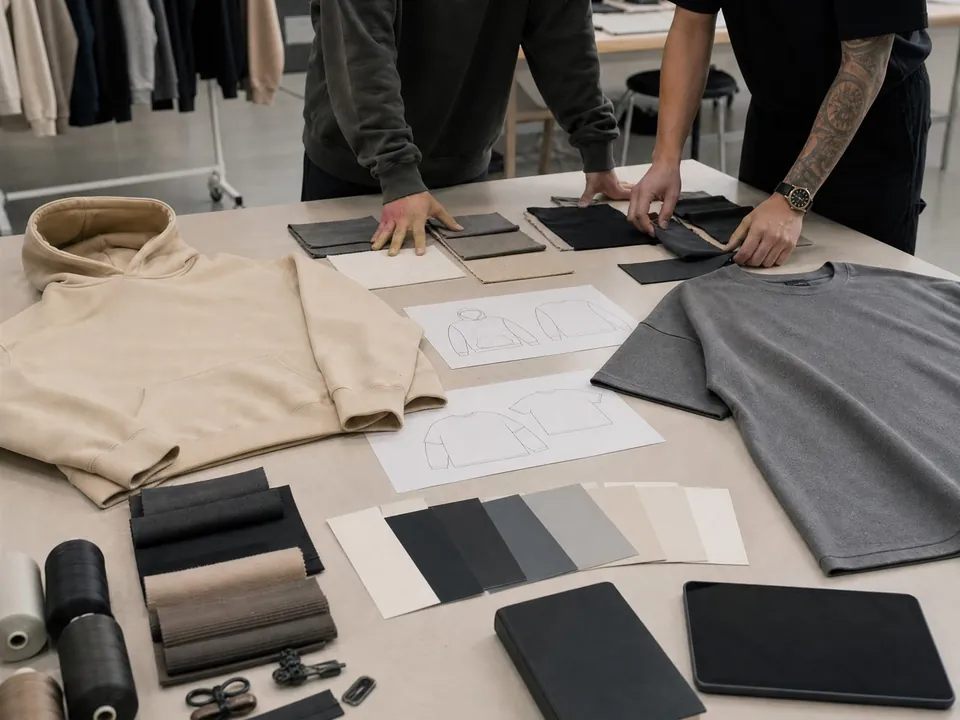
This guide sits before the quote and sample decisions. It does not replace the custom streetwear RFQ checklist, the custom streetwear sample process, or a project-specific production review. Its job is to help a buyer turn a creative capsule idea into a brief that can be compared and reviewed.
Start With a Capsule Logic, Not a Product Count
A first collection often becomes difficult when every garment introduces a new fit, fabric, color system, decoration method, label set, and packaging rule. The problem is not the number of names on the line sheet. It is the number of independent decisions the team must sample, approve, price, purchase, and check.
Write the capsule logic in one paragraph before choosing the final style list. State the shared visual idea, the intended buyer or wearer, the role of each garment, and the variables that are deliberately different. For example, a heavyweight hoodie and an oversized T-shirt may belong to one visual story while using different fabric families and different decoration routes. That is workable when the difference is intentional and recorded. It becomes risky when the difference appears because each style was briefed separately.
Use the production route comparison guide when deciding whether the capsule needs custom cut-and-sew development, decorated blanks, or a mixed route. Do not choose a route only because it sounds more premium; choose it because it supports the fit, material, decoration, quantity, and approval evidence the capsule needs.
Separate Shared Variables From Experimental Variables
Create two lists before requesting a quote:
- Shared variables: the fit language, core color direction, brand-finish rules, artwork standards, label architecture, and approval records that should remain consistent across the capsule.
- Experimental variables: a new wash, unusual trim, mixed decoration, a different silhouette, or a packaging idea that still needs a separate proof or feasibility answer.
Shared variables make comparison easier. Experimental variables are not bad; they simply need to be named so they do not quietly change the meaning of every other sample. If a new wash affects handfeel, shrinkage, color, and decoration order, treat it as a controlled development question rather than an aesthetic detail that can be added at the end.
The fabric and GSM options guide can help organize material choices, but a GSM target is not a complete fabric specification. Record composition direction, knit or woven structure, finish, color route, and any wash or shrinkage question that matters to the capsule.
Build a Variable Matrix Before the RFQ
A simple matrix reveals where one decision affects several styles. Keep it short enough that a buyer and supplier can review it in one call.
| Variable | Keep stable where possible | Decide before sampling | Why it matters |
|---|---|---|---|
| Fit block | Core silhouette language and named points of measure | Which styles share a block and which need a new pattern | A new block changes the sample evidence and size review |
| Fabric route | Compatible fabric family and finish direction | Which style needs a different structure, weight, or wash | Material changes can affect drape, shrinkage, decoration, and cost |
| Color system | Core neutrals or documented color references | Which colors are shared and which are test colorways | More colorways increase approval, purchasing, and packout decisions |
| Decoration | Artwork rules and placement references | Which method each style actually needs | Mixed methods may require separate proofs and production sequencing |
| Brand finish | Label, hangtag, bag, sticker, and carton logic | What is shared and what is style-specific | Incomplete packout rules create avoidable handoff questions |
The matrix is a planning tool, not a promise that every style can share a route. Mark a field as open when the team does not yet have enough evidence. An honest open field is easier to resolve than an assumption hidden inside a broad phrase such as “custom streetwear set.”
Choose a Lead Style to Prove the Hardest Decision
Do not sample the easiest garment first simply because it is quick to sketch. Choose a lead style that tests the variable most likely to affect the rest of the capsule. That could be the fit block, a washed fabric, a mixed decoration route, a shaped jacket detail, or the private-label packout.
The lead style should answer a defined question. Examples include:
- Does the chosen fit block create the intended proportion in the planned size range?
- Does the fabric and finish support the required decoration without changing the visual target?
- Can the label and packaging system be applied consistently across the garment family?
- Does the more complex construction justify a separate route from the supporting styles?
Keep accepted variables frozen while the lead question is reviewed. Changing the fit, fabric, artwork, and packaging at the same time makes it difficult to know what the next sample proves. The sample process guide is the narrower reference for documenting fit, fabric, decoration, labels, packaging, and approval checkpoints.
Keep Decoration Ambitious but Reviewable
Complex craft can make a capsule distinctive, but “use several techniques” is not a production brief. Name the method, artwork version, finished size, placement, color direction, surface effect, and approval evidence for each style.
Puff print, embroidery, applique, screen print, heat transfer, and washed finishes do not create the same review questions. A raised effect may need a close visual proof and a check of edge, height, coverage, and hand feel. Embroidery may need a sew-out or a review of detail limits. A wash can change the base garment and the decoration sequence. The actual route depends on the submitted product and artwork.
If the capsule deliberately uses multiple methods, group them into a small number of review lanes. Approve the artwork and placement language first, then confirm the method for each garment. This keeps the visual system coherent without pretending that every style follows one identical process. The puff print versus embroidery guide is useful when that specific choice is still open.
Plan Colorways and Sizes as an Approval System
Color and size decisions affect more than the creative board. They change the quantity mix, sample coverage, material purchasing, decoration review, labels, stickers, sorting, and carton planning.
Start by identifying the colors that define the capsule and the colors that are experiments. Use a named reference or physical swatch when color accuracy matters. Do not treat a screen color as a final production standard. For sizes, state the intended range and the size ratio you want reviewed. If the same fit block is used across styles, still identify where a style requires a separate measurement or grading decision.
The hoodie size grading and fit approval guide covers measurement language and grading questions in more detail. This article only needs the planning rule: keep the fit reference stable enough that a buyer can tell whether a later change is a new style decision or a correction to the original block.
Treat Packaging as Part of the Capsule
Brand finish should be planned with the garments, not added after the production route is chosen. Decide which labels, hangtags, polybags, size stickers, SKU references, and carton marks are shared, and which details vary by style or color.
A shared packaging system can reduce ambiguity, but only if the files and application rules are actually defined. Record the artwork version, dimensions, attachment method, folding or bagging direction, and the relationship between size information and SKU. Confirm what the supplier is expected to provide and what the buyer will supply.
Use the private-label packaging guide when the capsule needs a detailed packout brief. Do not claim that one packaging choice works for every market or product without checking the individual project.
Decide What Belongs in the First Drop
After the matrix is complete, divide the ideas into three groups:
- Core launch styles: the garments that express the capsule and share enough controlled logic to be reviewed now.
- Supporting styles: useful additions that can follow the same approved fit, material, decoration, or packaging decisions with limited new risk.
- Later experiments: ideas that introduce a new block, material, craft route, wash, or packout system and deserve their own development question.
Moving an experiment to a later drop is not abandoning the idea. It protects the first drop from becoming a collection of unrelated tests. It also gives the buyer a clearer way to evaluate the first production result before adding more variables.
Before requesting quotes, run the scope through the streetwear manufacturing quote comparison guide. Each supplier should receive the same product list, quantity logic, size range, material direction, decoration scope, labels, packaging, destination, and timing questions. A lower number is not comparable if the included scope changed.
Turn the Capsule Into a Reviewable Brief
The RFQ should make the capsule easy to separate into product rows. For each style, include the style name or code, garment type, quantity by color and size, fit reference, fabric direction, decoration method and placement, label and packaging needs, destination, and target timing. Add a short note explaining which variables are shared and which are intentionally experimental.
The custom streetwear RFQ checklist is the right place to collect the baseline fields. If the brief is still changing at a fundamental level, say so before a quote is treated as final. Feasibility, scope, and any production decision must be confirmed for the individual project.
Buyer answers
Frequently Asked Questions About First Streetwear Capsules
How many styles should a first streetwear capsule include?
There is no universal style count that makes a capsule safe. Choose the styles that share enough controlled variables to be reviewed together, then move new fit, material, decoration, or packaging experiments into a later drop. The right scope depends on the buyer brief, quantity plan, and evidence required.
Should every style in a capsule use the same fabric?
No. Styles can use different fabric families when the difference is intentional and documented. Group compatible routes, name the material and finish for each style, and identify how a change may affect fit, decoration, shrinkage, purchasing, or cost.
Is it a good idea to test several decoration methods in the first drop?
It can be, when each method answers a defined product question and the team can review the results separately. Do not change decoration, fit, fabric, and packaging at once if the next sample must prove which variable solved a problem.
How can a low-MOQ capsule avoid becoming too complicated?
Control the number of independent decisions rather than relying on a slogan about quantity. Share fit or packaging rules where appropriate, limit unnecessary color and size combinations, document decoration lanes, and confirm the supplier's route for each style before treating the capsule as one quote.
What should I send with a first-capsule RFQ?
Send the style list, quantity by color and size, fit references, fabric direction, artwork and decoration requirements, label and packaging files or specifications, destination, target timing, and a note separating shared variables from experiments. When the brief is ready, send the reviewable production brief through the RFQ form.
Make the Next Decision Smaller
A strong first capsule does not remove creative ambition. It makes the ambition reviewable. Freeze the decisions that should remain consistent, isolate the experiments that need their own proof, and send a supplier a brief that shows the difference. That gives the next quote, sample, and approval a specific job instead of asking one production round to answer every question at once.