
Tracksuits and sets
Custom Tracksuits Manufacturer for Matching Streetwear Sets
Produce matching tops and bottoms, tracksuits, and streetwear sets with custom logo placement, colorways, size ranges, and packing by set.
Small-batch projects.
Typical production.
Custom product route.
Brand buyer support.
Top-to-bottom consistency
A tracksuit is one product system built from two garments.
The jacket, hoodie or sweatshirt and the matching pants can use different patterns and construction while still needing one color target, one design language and one sellable SKU plan. Tracksuit pricing changes with the top/bottom architecture, fabric and color route, trim count, decoration on each piece, size-pairing model, packing method and quantity allocation. Quote, sample, approve and pack the relationship between the pieces—not only each piece in isolation.
Buyer guidance reviewed Sep 28, 2026
| Control layer | Set-level decision | Piece-specific input | Approval evidence |
|---|---|---|---|
| Set architecture | Define hoodie + jogger, zip jacket + pants, sweatshirt + pants, or another exact top-bottom combination. State whether pieces sell only as a set or also separately. | Give a reference, construction and measurement plan for each piece. A top and bottom do not automatically share a pattern block or grading rule. | Approved set map, separate style IDs and a sample review showing the pieces together and individually. |
| Fabric and color | State whether both pieces must use the same material and exact shade, or may coordinate through different fabrics, weights or surface finishes. | List fabric/GSM, rib, lining, mesh, wash, shell, waistband and trim color for the top and bottom separately. | Approved swatches or finished sample state under the same lighting, plus defined tolerance for intentional contrast or batch variation. |
| Fit relationship | Define the intended combined silhouette: oversized top with relaxed pants, fitted jacket with wide leg, cropped top with high rise, or another clear direction. | Send base-size measurements, top length/width/sleeve and bottom waist/rise/inseam/leg opening, with independent grading rules where needed. | Worn set review, measurement sheets, grading notes and movement checks for sitting, walking and layering. |
| Trims and construction | Choose whether zipper, drawcord, aglet, rib, elastic, snap and hardware finishes match across the set or follow separate functions. | Map hood, pockets, zipper, cuffs and hem for the top; waistband, drawcord, pockets, side seams and leg cuffs or hem for the bottom. | Approved trim IDs, placement/construction photos and functional tests for zipper movement, waistband recovery and pocket use. |
| Decoration system | Plan artwork as a family across chest, back, sleeve, leg, pocket and label locations. State which elements repeat and which intentionally differ. | Provide artwork version, method, size, colors and placement measurements for every application on each garment. | One placement map, approved decoration standards and a sample showing scale and balance when the set is worn together. |
| Size pairing and SKU | Decide same-size sets, buyer-selected mixed sizes, fixed top-bottom combinations, or separate piece ordering. | Supply quantities by top size and bottom size, the allowed pairing table, style-color-size codes and replacement-piece rules. | Approved SKU/pairing matrix that agrees with physical labels, stickers, order lines and the packing list. |
| Packout and cartons | Choose one-bag set packing, two bags bundled together, or fully separate unit packing. Define retail presentation and warehouse receiving needs. | List label, hangtag, bag, sticker and fold requirements for each piece plus set identifier, assortment and carton-mark fields. | One complete packed set, scan/data check where used, carton assortment map and final reconciliation record. |
Color approval route
“Black” is a name, not a matching standard.
- 01Choose the relationship.
Confirm whether top and bottom must match exactly, coordinate intentionally or use a documented contrast.
- 02Compare the actual materials.
Different fibers, GSM, rib, shell, lining or wash routes can reflect light differently even when the same color reference is used.
- 03Review the finished state.
Approve shade after the relevant wash, brushing, coating, heat or decoration process—not only on an unfinished swatch.
- 04Record acceptable variation.
Keep the approved sample or swatch reference and state what requires review when materials come from another batch.
Choose the sizing model
Set packing depends on how buyers choose top and bottom sizes.
Same-size set
One set size maps to both pieces.
A medium top is packed with medium bottoms. This is simple to identify but still requires independent top and bottom measurements and grading.
Fixed mixed pairing
The brand defines allowed combinations.
A set code can map, for example, one top size to a different bottom size. The complete pairing table must drive labels, stickers and packing.
Separate-piece ordering
Top and bottom behave as related SKUs.
Useful when customers choose sizes independently, but quantities, inventory, labels and carton records must be planned by piece rather than by set only.
Sample review
Inspect the set standing, moving and packed.
A flat-lay photo can confirm artwork presence but cannot prove set proportion, movement, pocket use, waistband recovery, color behavior or how the pieces sit together.
Worn proportion: top length, volume and hem position balance with rise, leg shape and footwear direction.
Movement: shoulder, elbow, waist, seat and knee remain usable without pulling the other fit decisions out of shape.
Decoration balance: chest, sleeve, back and leg artwork reads as one system at the approved scale and spacing.
Trim function: zipper, drawcord, waistband, pockets, cuffs and leg openings operate as specified.
Packout accuracy: correct pieces, sizes, labels, stickers and set code stay together through bag and carton packing.
Repeat-order record
Save the relationship, not only two garment files.
Set mapPiece IDs, colorways, pairing rules and sellable set codes.
SpecsApproved patterns, measurements, grading, fabric, trims and color references.
ArtworkVersion, method, dimensions, colors and placement for every piece.
PackoutLabels, bags, stickers, pairing checks, packing ratios and carton marks.
ChangesRepeat unchanged, revise with proof, add with sample, or remove from the next drop.
Quote-ready example
Replace the brackets with project data.
[Quantity] sets of [top + bottom architecture]; quantities and pairing by size attached; top and bottom measurement sheets attached; [fabric/GSM] with exact-match or coordinated color target stated; [zipper/drawcord/waistband/pocket] trims listed; chest [process] and leg [process] artwork with dimensions and placement; labels and hangtags by piece; [one-bag/two-bag/separate] packing; sample reviewed as a complete set; destination [country]; target date and schedule-start assumption stated.
RFQ checklist
What to send for a matching-set review
- Top and bottom style reference.
- Quantity by set and size range.
- Fabric, GSM, colorway, and trims.
- Decoration placement and artwork files.
- Packing method and shipping country.
FAQ
Tracksuit and set buyer answers
Can MyOwnWear produce matching tracksuit sets?
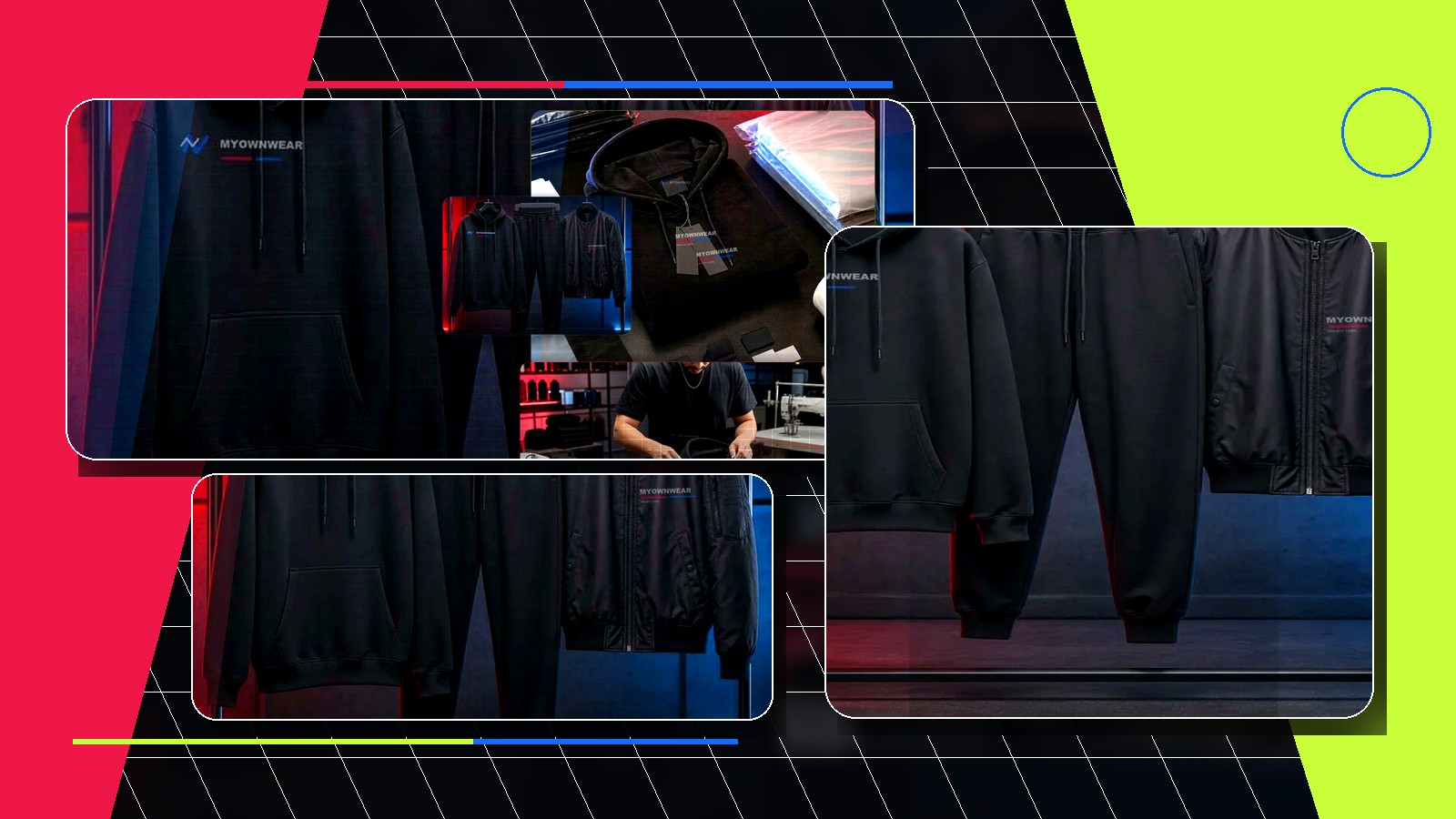
Yes. MyOwnWear can support matching tracksuits and streetwear sets with coordinated fit, color, logo, labels, and packing.
What is the MOQ for custom tracksuits?
Suitable tracksuit or set projects can start from MOQ 10, depending on fabric, trims, decoration, and packaging.
Can sets be packed together?
Yes. Tracksuits can be packed by set with polybags, size stickers, and carton marks when requested.
Next step
Send top and bottom references, quantity by set, size ratio, and destination.
MyOwnWear will review fabric pairing, color target, logo placement, set packing, MOQ, and repeat notes.