
Custom hoodies
Custom Hoodies Manufacturer for Streetwear Brands
Produce pullover, zip-up, oversized, and heavyweight fleece hoodies with custom prints, embroidery, labels, and packaging from MOQ 10.
Small-batch projects.
Typical bulk production lead time after approvals.
Custom product route.
Brand buyer support.
Hoodie construction control
A hoodie quote begins with construction, not decoration.
Two hoodies can share the same GSM and front logo while requiring different patterns, hood structure, rib, pockets, trims, sampling and production controls. Hoodie pricing changes with fabric and finish, pattern/construction, component count, decoration setup, label/packout scope, quantity allocation and approval route. Define the garment first, then match the artwork, labels and packout to that approved base.
Buyer guidance reviewed Sep 28, 2026
| Build layer | RFQ input | Sample must prove | Bulk lock |
|---|---|---|---|
| Silhouette and base pattern | Pullover or zip-up; regular, boxy, oversized or cropped direction; base size; body length; width; shoulder drop; sleeve shape and size range. | Worn shape plus garment measurements at the agreed measurement points. Check balance, movement, layering room and intended hem position. | Approved pattern version, base-size measurement sheet, grading rule, tolerance and any intentional asymmetry or oversize. |
| Body fabric and interior | Fleece or French terry route, fiber direction, target GSM or handfeel, face finish, brushed or loopback interior, color and wash treatment. | Weight or approved fabric reference, surface, stretch and recovery, inside feel, shade, drape, print compatibility and post-process dimensions when applicable. | Approved fabric or swatch reference, color standard, finish route, lot-control notes and whether measurements apply before or after wash. |
| Hood and neckline | Single or double layer, panel count, crossover or standard opening, lining, drawcord route, eyelet, neck tape and hood size or depth. | Hood volume, opening, seam alignment, weight on the neckline, drawcord path and how the hood sits both worn and down. | Pattern pieces, layer or lining reference, eyelet and drawcord IDs, placement measurements and approved construction photos. |
| Rib, cuffs and hem | Rib composition or handfeel, height, stretch and recovery, cuff and hem dimensions, color match and relaxed versus stretched measurement method. | Recovery after wear, cuff opening, hem tension, joining quality and whether rib changes the intended body or sleeve volume. | Approved rib reference, cut dimensions, attachment rule, finished measurements and color acceptance against the body fabric. |
| Pocket and opening | Kangaroo, split, welt or no pocket; pocket shape and placement; zipper type and puller for zip-ups; reinforcement and edge construction. | Pocket symmetry, opening comfort, usable depth, reinforcement, zipper movement and alignment with front artwork or seams. | Pocket pattern and placement, zipper or puller ID, reinforcement method, topstitch reference and inspection points. |
| Decoration surface | Artwork files, finished size, colors, exact front/back/sleeve/hood/pocket placement and proposed screen print, puff print, embroidery, transfer, patch or mixed route. | Scale, location on the worn garment, color, handfeel, stitch or ink coverage, edge quality and interaction with seams, pockets, rib or zipper. | Approved artwork version, placement measurement, process recipe or thread/color reference and one signed decoration standard. |
| Labels and packout | Neck, care and size labels; hangtag; bag; size/SKU sticker; carton mark; fold; packing ratio and destination data. | Label readability and comfort, attachment and placement, packed presentation, correct variable data and one complete packed unit where required. | Approved files, style-color-size mapping, packout instructions, variable-data source, carton assortment and final reconciliation record. |
Fit evidence chain
Turn the reference photo into measurable fit decisions.
- 01Choose one base size.
State the base size used for pattern review and identify whether the reference garment, body measurements or finished garment measurements are the decision source.
- 02Name the critical points.
At minimum, review body width, body length, shoulder, sleeve length, cuff, hem, hood and pocket positions using one agreed measurement method.
- 03Separate fit from grading.
An approved medium does not automatically define every size. Record the grade rule and inspect the smallest and largest requested sizes where risk is higher.
- 04Define the measurement state.
For washed or shrink-sensitive routes, state whether the specification and tolerance apply before wash, after wash or at final packed condition.
Choose the route
Different hoodie builds need different evidence.
Pullover
Control neckline, hood and kangaroo pocket as one front system.
Check the neck opening, hood weight, overlap or seam, pocket shape and front artwork together. A large graphic may need to move when the pocket or neckline geometry changes.
Zip-up
Make the center-front trim part of the artwork and fit plan.
Zipper tape, puller, split pocket, hem alignment and artwork crossing the opening require their own references. Use the zip-up hoodie guide for the expanded trim route.
Washed or heavyweight
Approve the finished garment, not only the raw fabric.
Heavy fleece, garment wash and surface treatments can change drape, shade, handfeel, measurements and decoration behavior. Lock the review state and acceptable variation before bulk.
Artwork placement map
Review artwork on the approved silhouette.
Artwork size alone is incomplete. Give a measurement from a stable garment point and review the design against seams, rib, pocket, zipper and hood folds.
Front: chest or center placement, neckline distance, pocket clearance and zipper split.
Back: hood overlap, upper-back position, print width and side-seam clearance.
Sleeve: shoulder start point, rotation, cuff clearance and left/right orientation.
Hood or pocket: visible area in use, seam path, panel shape and distortion when worn.
Sample-to-bulk release
Approve evidence, not a vague “looks good.”
FitMeasurement sheet, worn review and grading notes agree.
FabricApproved fabric, finish, color and measurement state are identified.
CraftArtwork version, process, color and placement standard are signed off.
TrimsRib, drawcord, eyelet, zipper, pocket and label references are locked.
PackoutVariable labels, stickers, bag, fold and carton mapping are approved.
Quote-ready example
Replace each placeholder with project data.
Oversized pullover hoodie; [quantity] pieces across [colors] and [sizes]; approved medium reference with body width, length, shoulder and sleeve measurements attached; [fleece/French terry] route at target [GSM or handfeel]; double-layer hood; kangaroo pocket; rib specification attached; front [process] artwork at [size and placement]; sleeve [process] artwork; custom neck, care and size labels; hangtag, bag and size sticker; sample required before bulk; destination [country]; target date and schedule-start assumption stated.
RFQ checklist
What to send for a hoodie review
- Hoodie type: pullover, zip-up, oversized, cropped, or heavyweight.
- Target quantity and size range.
- Base size, measurement method, and grading plan for the requested range. Use the hoodie size grading guide.
- Fabric type, GSM, color, and fit reference.
- Logo artwork, placement, and decoration method.
- Private label and packaging requirements.
FAQ
Custom hoodie buyer answers
What is the MOQ for custom hoodies?
MyOwnWear can support custom hoodie projects from MOQ 10 when fabric, decoration, and packaging requirements are suitable.
What hoodie decoration methods are available?
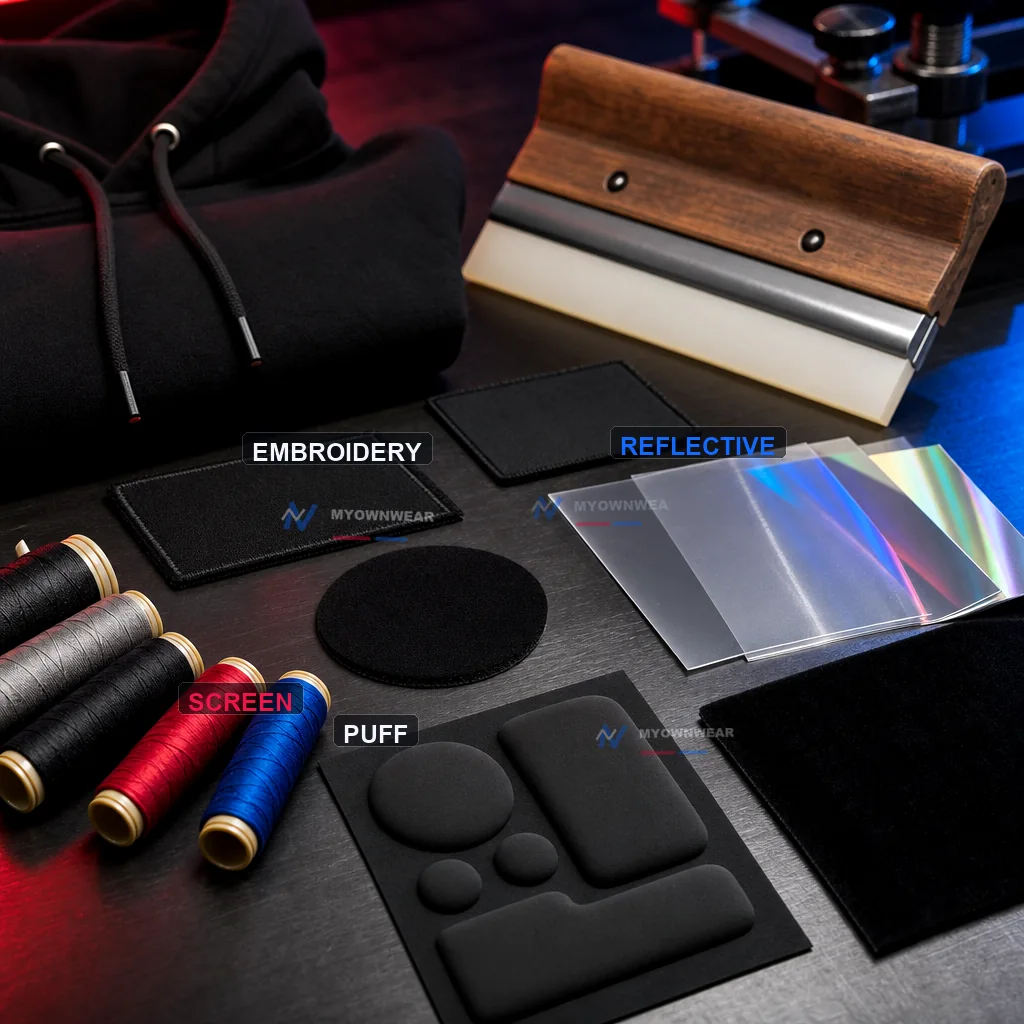
Common options include screen print, puff print, embroidery, reflective print, heat transfer, and mixed placements.
Can hoodies include private labels?
Yes. Hoodies can include neck labels, woven labels, hangtags, polybags, stickers, and carton marks.
Next step
Send hoodie fit, target GSM, artwork, quantity, and destination.
MyOwnWear will review hoodie construction, GSM, craft method, labels, MOQ, and packaging.