
Puff Print Artwork Prep
Puff Print Hoodie Artwork Checklist for Cleaner Streetwear Sampling
Use this checklist before sending a puff print hoodie RFQ. Review artwork file type, line thickness, print size, placement, color count, fleece or GSM, puff height expectation, labels, packaging, destination, and sample approval notes.
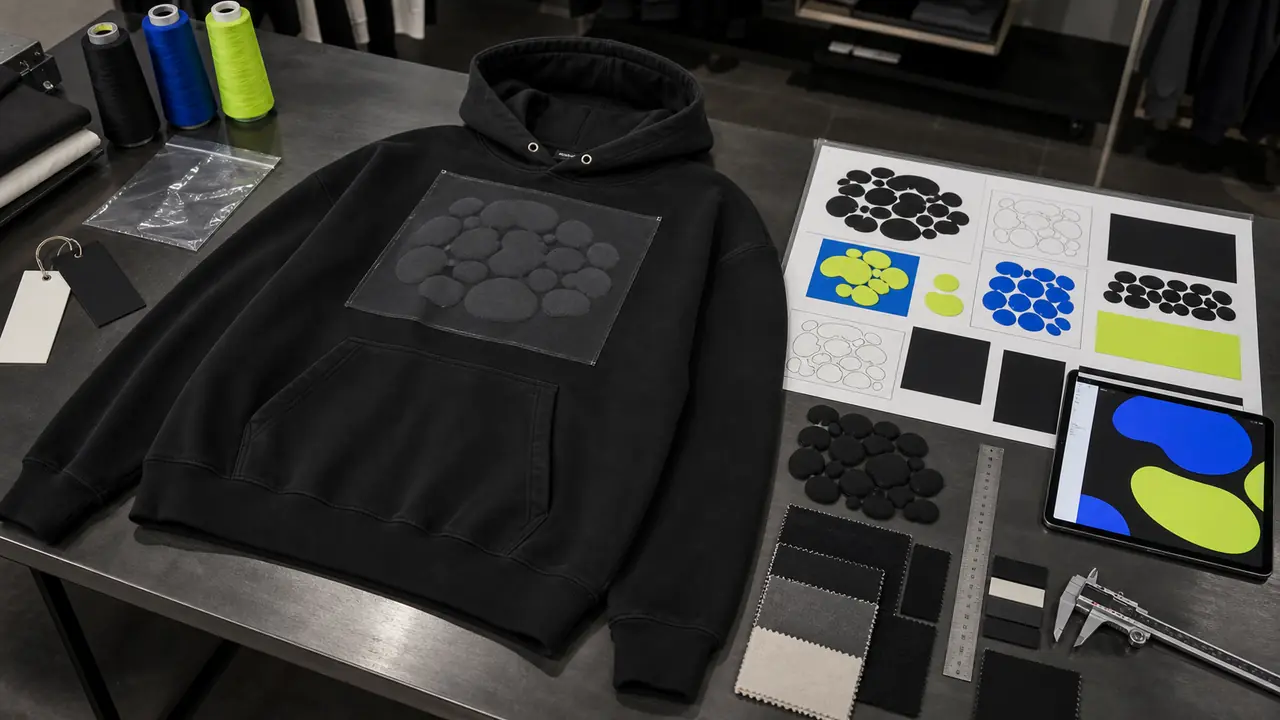
Buyer Answer Snapshot
What should buyers check before sending puff print hoodie artwork?
Before sending a puff print hoodie RFQ, buyers should confirm the artwork file, print size, line thickness, placement, color count, hoodie fabric or GSM, puff effect expectation, label and packaging needs, destination country, and sample timeline.
Puff print usually works better with bold shapes, clear edges, enough open area, and realistic placement. Tiny text, thin strokes, photo detail, and complex gradients can make sampling slower or less stable.
Vector First
Clean vector artwork is easier to review than a low-resolution screenshot or blurred mockup.
Bold Lines Win
Raised ink needs enough line width and open area to keep the design readable after sampling.
Size And Position
Chest, back, sleeve, and pocket placements should include print size and reference position.
Quote-Ready Details
Quantity, GSM, labels, packaging, country, and timeline help the quote move faster.
Why Artwork Prep Matters For Puff Print Hoodies
Puff print is a strong streetwear effect because it gives hoodie graphics visible raised texture. The same raised effect also makes artwork more sensitive than normal flat print. A design that looks good on a phone mockup may be too detailed, too small, too thin, or too close to seams for clean sampling.
This guide helps a buyer send better files before asking for a price. Better artwork inputs reduce vague back-and-forth and make the RFQ easier to review for MOQ 10 sampling, private label finishing, and repeat-order planning.
- Use bold artwork instead of tiny text or photo detail.
- Send the original vector file when available.
- Mark the print size and placement on the hoodie.
- Confirm hoodie fabric, fleece weight, or GSM target.
- Include labels, packaging, destination, and sample timeline.
Quote-Ready Puff Print Artwork Checklist
Use this checklist before submitting a puff print hoodie RFQ to MyOwnWear. If one item is missing, the quote can still start, but the review may need extra clarification.
- Original artwork file, preferably vector format.
- Mockup or reference image showing the intended visual effect.
- Print size in width and height.
- Placement: chest, back, sleeve, hood, pocket, or multiple positions.
- Line thickness and smallest detail size for review.
- Color count and base garment color.
- Hoodie type: pullover, zip-up, oversized, cropped, heavyweight, or regular.
- Fabric composition, fleece weight, or GSM target.
- Puff effect expectation: subtle, medium, or strong raised texture.
- Neck label, care label, hangtag, polybag, and carton mark needs.
- Quantity by color and size range.
- Destination country and sample or bulk timeline.
Artwork File Type And Resolution
Vector artwork is usually the cleanest input for puff print because edges and scale can be reviewed more accurately. A screenshot can help show the idea, but it should not be the only production reference when the design needs clean raised edges.
- Best: editable vector file with clear shapes and separated colors.
- Useful: high-resolution transparent PNG for visual reference.
- Helpful: hoodie mockup showing approximate placement and scale.
- Risky: blurred screenshots, tiny web images, photos of a screen, or files with hidden low-resolution artwork.
If the artwork is not production-ready, send the reference anyway and label it as a reference. That keeps the review honest and prevents the sample from being judged against an impossible file.
Line Thickness And Small Details
Puff print needs enough surface area to rise cleanly. Thin lines, tiny dots, small text, and delicate gradients can lose clarity or become uneven when the ink expands.
- Use bold shapes, thicker strokes, and clean edges for stronger raised effect.
- Avoid tiny text unless it is reviewed and simplified before sampling.
- Separate important details from each other so raised areas do not merge.
- Use fewer, clearer graphic areas when the hoodie has heavy fleece or a washed surface.
- Approve a sample before judging bulk quality.
Review custom puff print hoodie manufacturing or compare puff print and embroidery.
Print Size And Hoodie Placement
The same artwork can feel different on chest, back, sleeve, hood, pocket, and oversized hoodie placements. A buyer should send the target print size and a placement mockup instead of saying only “put the logo on the front.”
- Chest print: confirm center placement, width, and distance from neckline if available.
- Back print: confirm width, height, and whether the graphic should sit high, center, or low.
- Sleeve print: confirm sleeve side, print length, and seam interaction.
- Pocket area: confirm whether the print crosses the pocket seam or stays above it.
- Hood or cuff details: check if the surface is practical before sampling.
For oversized hoodies, placement should be reviewed with the actual fit direction because the chest area, shoulder drop, sleeve length, and body length can change how the design reads.
Color Count, Garment Color, And Puff Effect
Color count affects the review path, setup, and sample result. The base garment color also changes how visible the raised print looks. A black hoodie with tonal puff print feels different from a high-contrast blue or lime artwork route.
- Send each artwork color clearly, even if the final effect is tonal.
- Confirm the base hoodie color before judging print contrast.
- State whether the puff effect should be subtle, medium, or strong.
- Ask for sample review before locking bulk production.
- Keep reference photos for repeat-order comparison.
Fabric, GSM, And Surface Compatibility
Puff print does not sit on every surface the same way. Fleece weight, fabric composition, wash route, rib areas, seams, and garment stretch can affect the final raised texture.
- Send fabric composition and GSM target if available.
- Tell the manufacturer if the hoodie is brushed fleece, French terry, washed, or garment dyed.
- Avoid placing large puff areas across heavy seams unless reviewed.
- Check whether the print surface is flat enough for the intended artwork.
- Approve the sample before bulk production.
Read the custom hoodie GSM guide for fabric planning.
What To Send With Your Puff Print Hoodie RFQ
- Artwork file and mockup reference.
- Print size, placement, and color count.
- Hoodie type, fabric, GSM, and garment color.
- Quantity by color and size.
- Neck label, care label, hangtag, polybag, size sticker, and carton mark needs.
- Destination country and shipping preference.
- Sample deadline and bulk delivery target.
You can start with reference files if the tech pack is not ready. For file review, email [email protected] or use the RFQ form.
FAQ
What artwork works best for puff print hoodies?
Puff print usually works best with bold shapes, clean edges, thicker lines, enough open area, and clear placement. Tiny text, thin strokes, photo detail, and complex gradients should be reviewed before sampling.
Do I need a vector file for puff print?
A vector file is preferred because it keeps edges and scale cleaner for review. A high-resolution PNG and hoodie mockup can help, but a low-resolution screenshot should be treated as a reference only.
What placement details should I send?
Send the placement area, print width and height, hoodie mockup, and any notes for neckline distance, sleeve side, back position, pocket interaction, or seam interaction.
Can puff print be used on heavyweight or washed hoodies?
It may be possible, but fabric, GSM, surface, wash route, shrinkage, and placement should be reviewed together. Sample approval is important before bulk production.
What should I send for a faster puff print hoodie quote?
Send artwork, mockup, print size, placement, color count, hoodie type, GSM target, quantity, label and packaging needs, destination country, and sample timeline.
Send Cleaner Puff Print Hoodie Files
A cleaner file makes the sample route easier to review. Send the artwork, print size, placement, hoodie details, labels, packaging, destination, and timeline so MyOwnWear can review the puff print route clearly.
Next Buyer Guide
Check Decoration Against Hoodie Construction
Puff print near a zipper, pocket, rib, seam, or hood channel needs a different placement review than a flat body panel. Connect artwork decisions to the garment route.
Open The Custom Hoodie Trim Guide