
Custom Embroidery Manufacturing
Custom Embroidery Streetwear Manufacturer for Brand Drops
Plan embroidered hoodies, jackets, tees, pants, stitched patches, labels, thread colors, backing, placement, MOQ 10 sampling, packaging, and export-ready RFQs before production starts.
Buyer Answer Snapshot
Can MyOwnWear manufacture custom embroidered streetwear?
MyOwnWear can review custom embroidery streetwear RFQs from MOQ 10 when the buyer provides garment type, quantity, size range, logo or artwork file, embroidery size, placement, thread color target, backing requirement, label needs, packaging needs, destination country, and timeline.
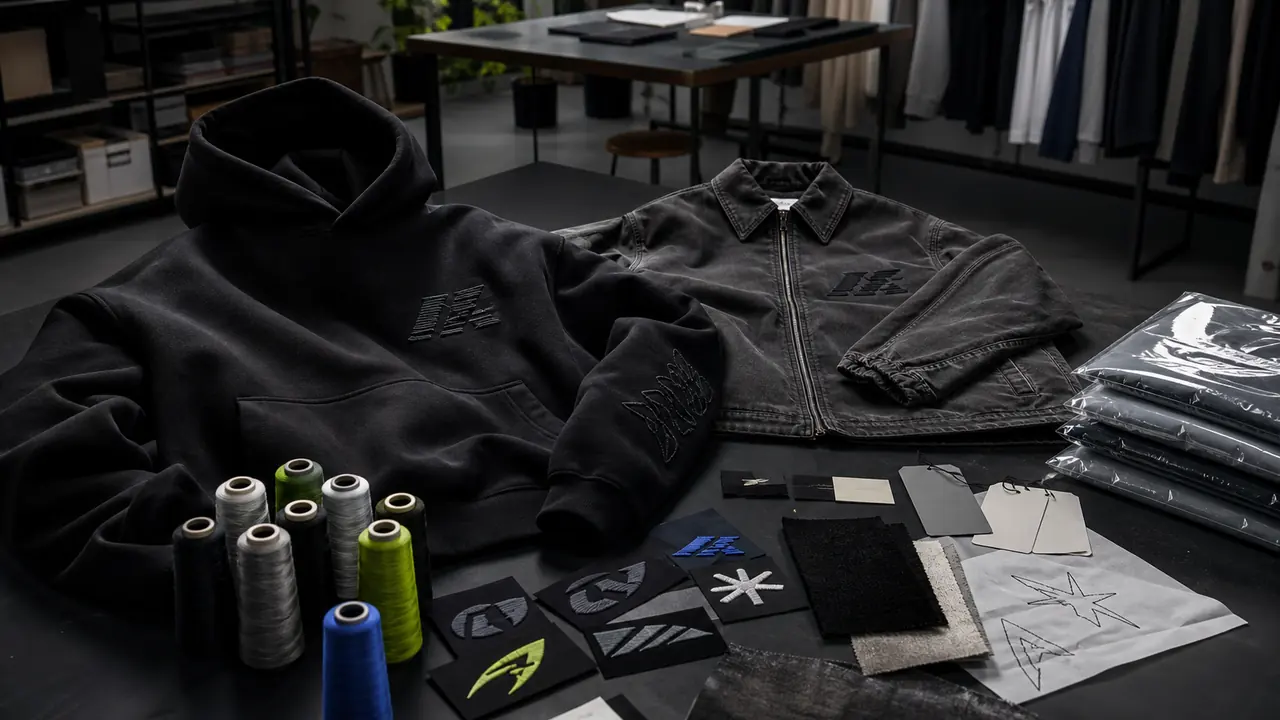
Embroidery works best when the stitched area is matched to the garment surface. Hoodies, jackets, tees, pants, and patches each need different placement and stability checks before sampling.
Stitched Brand Marks
Use embroidery for chest logos, sleeve marks, tonal details, patches, and high-value streetwear identity.
Garment Stability Review
Fabric weight, stretch, seam position, and panel shape affect how clean the stitched result can be.
Sample Before Bulk
MOQ 10 review is possible when stitch size, placement, quantity, labels, packing, and destination are clear.
Labels And Packaging
Neck labels, woven labels, hangtags, polybags, stickers, and carton marks can be quoted with the garment.
Why Embroidery Fits Streetwear Brand Drops
Embroidery gives a garment a stitched, physical identity that usually feels more premium than a basic flat logo print. It is useful when a streetwear brand wants a durable chest mark, sleeve detail, tonal logo, patch, or subtle brand finish across a small drop.
The key is not only choosing embroidery as a craft. The manufacturer must check whether the garment surface can support the stitch route, whether the logo is too detailed, whether the placement crosses a seam, and whether the backing or patch construction will affect comfort.
- Hoodie chest, sleeve, hood, or pocket embroidery.
- Jacket chest marks, sleeve details, or back panel embroidery.
- Oversized tee embroidery with fabric stability review.
- Pants, cargos, and tracksuit logo placement.
- Stitched patches or applique-style brand pieces.
Embroidery Quote And Lead Time Drivers
A useful embroidery quote and lead-time review needs more than a logo file. Send the production variables that change digitizing, stitch work, sample approval, unit cost, and scheduling.
- Garment type and fabric route.
- Quantity per style and color.
- Size range and fit target.
- Logo or artwork file.
- Embroidery size and placement.
- Thread colors or tonal target.
- Flat embroidery, raised embroidery, patch, or applique route.
- Backing or stabilizer needs.
- Labels, hangtags, polybags, stickers, and carton marks.
- Destination country.
- Sample target, approval date, and requested bulk delivery window.
- Repeat-order or drop plan if available.
Scheduling note: Confirm the final lead time after the stitch route, garment surface, approved sample, material and trim readiness, labels and packout, quantity, and destination are locked.
Logo File And Stitch Size
Embroidery is built from thread, not pixels. Thin strokes, tiny letters, complex gradients, and photo-style detail may not translate cleanly into stitches. A clean vector file, high-resolution artwork, or simple logo mark helps the review move faster.
- Send the original logo or artwork file when available.
- Mark the intended embroidery width and height.
- Confirm whether the logo should be tonal or high contrast.
- Avoid tiny text unless the size can support it.
- Decide whether the stitch should be direct embroidery or a patch.
If the artwork is very detailed, the better route may be simplifying the embroidery area, using a woven patch, or combining embroidery with another decoration method.
Placement Decisions By Garment Type
Placement affects both visual impact and production risk. A stable chest panel is not the same as a seam-near sleeve logo, a hood mark, a pocket logo, or a washed jacket panel. The RFQ should mark the intended placement before sampling.
- Hoodies: chest, sleeve, hood, pocket, hem, or back.
- Jackets: chest, sleeve, back panel, collar, or patch area.
- T-shirts: chest, sleeve, lower body, or label-area detail.
- Pants and cargos: pocket, thigh, back pocket, or lower leg.
- Tracksuits: matching chest, sleeve, pants, and label placement.
For first drops, a smaller direct embroidery mark or patch route can be easier to approve than a large complex embroidered panel.
Embroidery, Patches, And Mixed Craft
Embroidery can stand alone, but many streetwear designs use it with puff print, screen print, wash effects, applique, or private label finishing. Mixed craft can raise perceived value, but it also needs better production planning.
- Use embroidery for a premium identity mark.
- Use puff print for raised graphic impact.
- Use applique or patch when the logo needs a separate material layer.
- Use wash effects only after checking color and shrinkage risk.
- Keep label and packaging decisions in the same RFQ.
Sampling And QC Checks
Embroidery should be sampled before bulk production. The sample gives the buyer a chance to check stitch density, edge clarity, thread color, backing feel, placement, and how the garment hangs after stitching.
- Logo clarity and edge shape.
- Thread color and tonal effect.
- Stitch density and surface feel.
- Backing comfort and inside finish.
- Placement accuracy and symmetry.
- Garment distortion around the stitched area.
- Label, hangtag, polybag, and carton mark confirmation.
Bulk production should follow the approved sample notes. If the buyer changes artwork, placement, garment fabric, or wash route after sample approval, the embroidery route should be reviewed again.
Private Label Embroidered Streetwear
Embroidery often works best when it is connected to the full brand finish. A small stitched chest mark can feel stronger when the neck label, care label, hangtag, polybag, size sticker, and carton mark are planned together.
- Woven neck label.
- Care and size labels.
- Hangtag and string.
- Polybag and size sticker.
- SKU sticker or barcode if required.
- Carton mark and packing ratio.
What To Send For A Faster Embroidery RFQ
- Garment type: hoodie, jacket, tee, pants, tracksuit, or patch.
- Quantity per style and color.
- Size range.
- Fabric or GSM target.
- Logo file, artwork file, or reference image.
- Embroidery size and placement.
- Thread color target.
- Direct embroidery, raised embroidery, patch, or applique route.
- Label and packaging needs.
- Destination country.
- Target sample and bulk timeline.
You can send reference photos first if production files are not ready. For file review, email [email protected] or use the RFQ form.
FAQ
Can MyOwnWear make low MOQ embroidered streetwear?
Yes, low MOQ embroidered streetwear can be reviewed when the garment type, quantity, logo file, stitch size, placement, thread colors, labels, packaging, destination, and timeline are clear.
What artwork works best for embroidery?
Embroidery usually works best with clear shapes, simple logos, enough line thickness, and limited tiny detail. Very small text, photo detail, complex gradients, and thin strokes may need simplification.
Is direct embroidery or patch embroidery better?
Direct embroidery works well for many chest, sleeve, and logo placements. Patch embroidery can be better when the logo needs a separate material layer, stronger edge finish, or easier placement across different garments.
Can embroidery be used with puff print or wash effects?
Yes, but mixed craft should be reviewed before sampling. Puff print, embroidery, wash effects, and applique can change cost, order planning, sample approval, and production sequence.
What should I send for an embroidery quote?
Send garment type, quantity, size range, logo file, embroidery size, placement, thread color target, label and packaging needs, destination country, and sample or bulk timeline.
Embroidery artwork review
Not Every Logo Should Go Straight To Embroidery.
Thread cannot copy every pixel. Tiny text, thin strokes, gradients, photo detail, and oversized stitch areas should be reviewed before sampling so the final piece looks intentional instead of muddy.
"Can you embroider this full logo on a hoodie?"
Missing file type, final stitch size, placement, thread count, tiny text decision, backing route, garment fabric, labels, packaging, and approval notes."Left chest embroidery, 8 cm wide vector logo, remove 3 mm text, 4 thread colors, black fleece hoodie, backing needed, neck label and polybag."
This gives sampling enough detail to check stitch clarity, cost, placement, backing comfort, and repeat consistency.File Type
Vector artwork is best. High-resolution PNG can start review, but final stitch work may need cleanup or digitizing.
Minimum Detail
Small letters, hairline strokes, shadows, and gradients usually need simplification before embroidery sampling.
Stitch Size
Confirm final width and height. A logo that works at 14 cm may fail at 4 cm because thread needs physical space.
Placement Surface
Chest, sleeve, hood, pocket, jacket panel, or pant placement changes stability, distortion risk, and backing comfort.
Thread Route
Define tonal, contrast, metallic-look, raised, flat, patch, or applique route before quoting the sample.
Approval Notes
Approve stitch clarity, thread color, edge shape, backing feel, placement, label route, and packing before bulk.
Embroidery Artwork RFQ Input
Send logo file, final embroidery size, garment type, placement, thread colors, detail to simplify, backing or patch route, quantity, size range, labels, packaging, destination, and sample timeline.
Send A Custom Embroidery Streetwear RFQ
Embroidery needs a real production review: garment surface, stitch size, placement, backing, labels, packaging, MOQ, and destination. Send the details so MyOwnWear can review the route clearly.
Buyer FAQ
Questions buyers ask before a craft RFQ
Can MyOwnWear make low MOQ embroidered streetwear?
Low MOQ embroidered streetwear can be reviewed when the garment type, quantity, logo file, stitch size, placement, thread colors, labels, packaging, destination, and timeline are clear.
What artwork works best for embroidery?
Embroidery usually works best with clear shapes, simple logos, enough line thickness, and limited tiny detail. Very small text, photo detail, complex gradients, and thin strokes may need simplification.
Is direct embroidery or patch embroidery better?
Direct embroidery works well for many chest, sleeve, and logo placements. Patch embroidery can be better when the logo needs a separate material layer, stronger edge finish, or easier placement across different garments.
Can embroidery be used with puff print or wash effects?
Embroidery can be used with puff print, wash effects, and applique, but mixed craft should be reviewed before sampling because it can change cost, order planning, sample approval, and production sequence.
What should I send for an embroidery quote?
Send garment type, quantity, size range, logo file, embroidery size, placement, thread color target, label and packaging needs, destination country, and sample or bulk timeline.